When a sewer backup is an emergency
A slow tub is an annoyance. Raw sewage on a floor is a health problem, because it carries bacteria that soak into carpet, drywall and wood.
Call right away if any of these are happening:
- Sewage or dark water rising in a basement shower, tub or floor drain
- A toilet that bubbles or overflows when the washing machine drains
- Every drain in the house running slowly at the same time
- A sewer smell inside the house along with standing water
- Water or wet ground around the outdoor cleanout
Where the blockage usually sits
Which drains complain, and in what order, tells us a lot before we open a cleanout.
| What you see | Likely location | What it means |
|---|---|---|
| One sink drains slowly | Branch line | Usually a smaller cable job, not the main sewer |
| Basement tub or floor drain backs up first | Main sewer line | The lowest opening gives way first when the main is blocked |
| Toilet gurgles when the washer runs | Main sewer line | Air and water are being pushed back up the pipe |
| Water at the outdoor cleanout | Main line or lateral | The blockage is between the house and the street |
| Clears, then clogs again in weeks | Roots, belly or break | Cleaning is a symptom fix and the pipe needs a camera |
Basements sit lowest in the house, so they are almost always the first place a blocked main shows itself. If your home has no basement, look at the lowest shower or tub instead.
What to do in the first hour
Stop every fixture that drains. A toilet flush is about 1.6 gallons and a washer cycle is far more, and all of it ends up on the floor if the main is blocked.
Find your main water shutoff and turn it clockwise if water is still rising from a broken fixture. Put towels at doorways, keep electronics and cords off the wet floor, and stay out of any flooded room with a plugged-in appliance in it.
Basement drain overflowing after hours?
The line is answered 24/7. Call and we will line up a same-day visit for the main sewer.
How we clean a main sewer line
Most residential main lines are 4 inches across and run 50 feet or more from the house to the street.
- 1
Find the access point
We look for the cleanout, usually a capped pipe near the foundation, in a crawl space or in the basement.
- 2
Open and look
Standing water in the cleanout tells us the blockage is downstream of it.
- 3
Run the cable
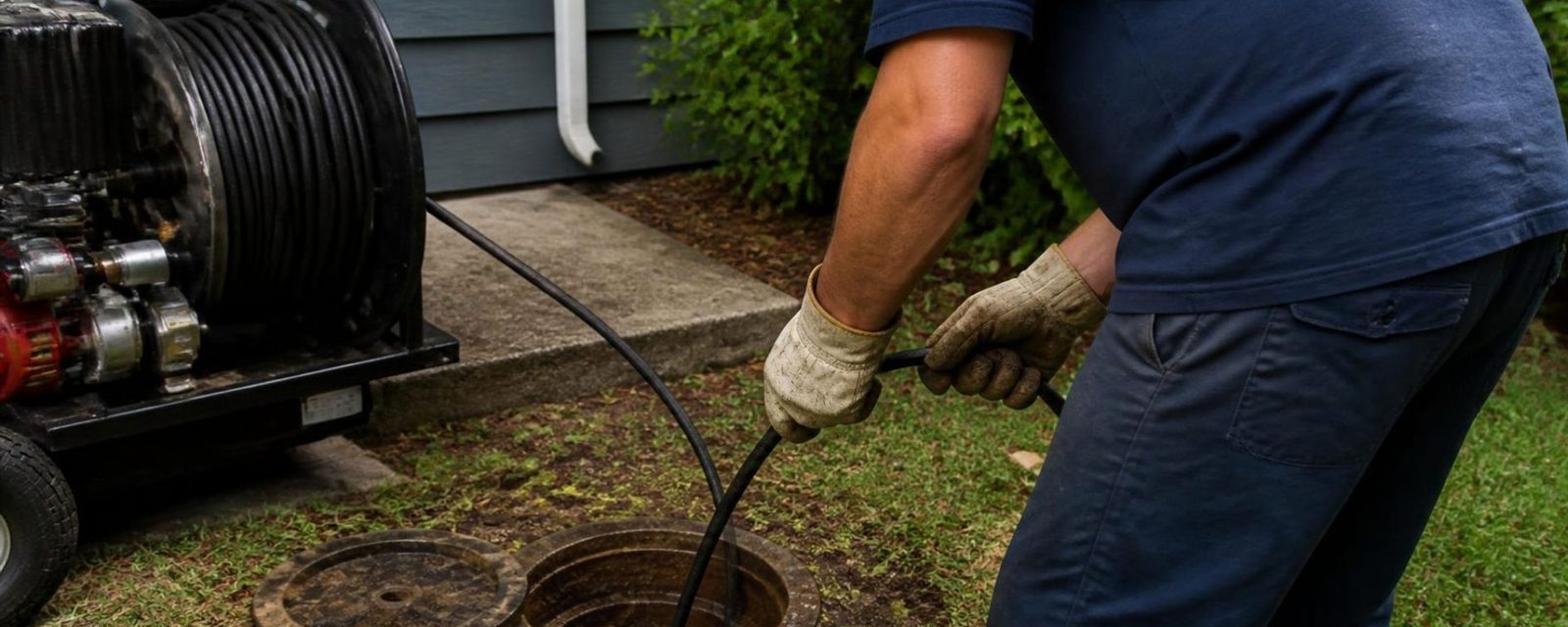
A powered drum machine feeds a cutting head through the pipe until the line moves again.
- 4
Flush and test
We run water through several fixtures to confirm the line is draining properly.
- 5
Camera if needed
When roots or a sag are likely, a camera shows the pipe before you decide on next steps.
If grease or scale lines the whole pipe, a cable only punches a hole through it. That is a case for hydro jetting, which scrubs the pipe wall with pressurized water.
What blocks a main line
The cause decides whether cleaning is enough or whether the pipe needs work.
Tree roots
Roots follow moisture into joints in clay and older cast iron pipe. They grow back, so a cleaned line can clog again within a year or two.
Grease and wipes
Fat coats the pipe wall and wipes snag on it. The two together make a plug that a toilet flush cannot move.
A sagging section
A low spot, called a belly, holds water and waste. Solids settle there and the clog keeps coming back.
A broken or offset joint
A cracked pipe lets soil fall in. Cleaning will not fix that, and a camera is the only way to see it.
Sewer, septic and who to call
Most Midvale properties connect to a public sewer. If yours is on a septic tank instead, tell us on the first call, because a full tank and a blocked sewer lateral look alike and need different fixes.
We clean the pipes that belong to the property. We do not pump septic tanks, and we will say so rather than send the wrong truck.
Which sewer district serves your street
Midvale City Public Works collects wastewater for about one-third of the city. Three other districts cover the rest: Cottonwood Improvement District, Midvalley Improvement District and Sandy Suburban Improvement District, so the right agency to call about the street main depends on where you live.
The pipe from your house out to that main is typically the property owner's to maintain, not the city's. If our cable reaches the main and the water still will not move, the problem may be in the street, and we can point you to the district that handles your address.
Rental drain machine or a licensed plumber?
Tool rental yards sell main line cable machines by the day. For a 4-inch line, the machine is the easy part.
Renting a machine
- Heavy drum that is hard to move down basement stairs
- No way to see the pipe before or after
- Easy to snag a root ball or jam a cutter
- A cable can kink and need cutting out of the line
Licensed plumber
- Right cutter size for the pipe and the blockage
- Camera on hand to confirm what is in the line
- Clear explanation if the pipe is broken
- Clear price before work starts
What affects the cost of sewer line cleaning
A main line cleaning does not have one flat price because the lines are not alike.
Homeowner policies often cover a sudden sewage backup only with a water backup endorsement. Call your insurer, take photos before you clean, and keep any receipts.
Before the plumber arrives
A few minutes of prep helps the visit go faster.
- Find the outdoor or basement cleanout and clear a path to it
- Note which fixtures are backing up and which still drain
- Tell us if the line has been cleared before and when
- Move rugs, boxes and stored items away from the floor drain
- Keep pets and children out of the affected room
If you cannot find a cleanout, say so on the call. We can often find the access point faster than you expect.
When cleaning is not the answer
If the camera shows a cracked, collapsed or heavily rooted pipe, the right move is repair. We will explain the picture and the options, and you decide. See sewer line repair for how that works.
For smaller clogs in sinks and tubs, drain cleaning is usually the better fit. A planned camera check without a backup is covered under sewer inspection.
Sewer line cleaning questions from Midvale homeowners
Yes. The line is answered 24/7, including holidays. We book same-day appointments when available and give you a clear price before work starts.
If a single sink is slow, it is probably a branch line. If a toilet gurgles when you run the washer, or the basement drain overflows, the main line is the likely culprit.
It depends on your policy. Many standard policies leave out sewage backup unless you added a water backup endorsement. Call your insurer and take photos before cleanup.
The city says lateral maintenance typically falls to the property owner. The main under the street belongs to whichever sewer district serves your address.
It can, especially if roots or a sagging pipe caused it. A camera check shows whether the cause is still there so you can plan around it.
No. We clean sewer lines and drains. If your property has a septic tank, tell us when you call so we can tell you what we can and cannot do.