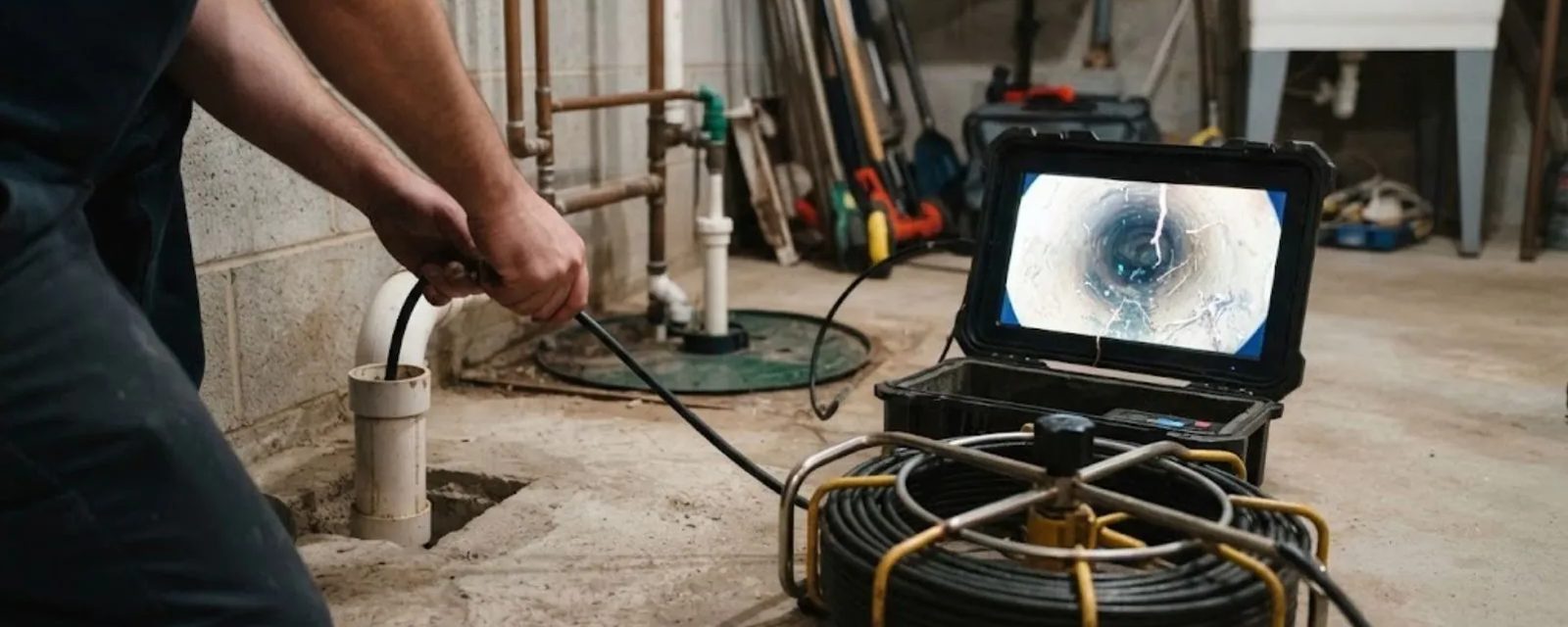
When a sewer camera inspection is worth it
A scope is not a routine yearly chore. It earns its cost in a handful of situations.
- You are buying a house and want to know what the lateral looks like before closing
- A main line clog has come back after cleaning
- Several drains gurgle or back up together
- There are mature trees near the sewer path
- You smell sewer gas in a bath or basement, or a floor drain has been dry for a long time
- You plan to finish a basement or pour new concrete over the line
If only one sink is slow, a camera is rarely needed. Start with drain cleaning and look deeper only if the problem returns.
A sewer scope before you buy
A general home inspector looks at fixtures and visible pipes, but does not run a camera down the lateral. Replacing a failed sewer line can be one of the largest repairs a homeowner faces, so a scope during the inspection window gives you facts to negotiate with.
Ask your agent for your exact inspection deadline, because a camera visit needs a day or two of lead time. If the cleanout is buried or missing, tell us up front. We may need to pull a toilet to reach the line, which takes longer.
Need the line checked soon?
Call and tell us when your deadline is. We will look for the earliest same-day opening.
How the inspection works
Most scopes take under an hour once we have access.
- 1
Find access
We use a cleanout, a pulled toilet or a roof vent to get the camera into the line.
- 2
Run the camera
A flexible cable carries a lit, waterproof lens down the pipe toward the street.
- 3
Mark and measure
We note problems by distance from the entry point, and can trace the camera head above ground with a locator.
- 4
Review the video
We show you the footage, explain it in plain terms and discuss options.
What the inspection report shows
The recording is the real evidence. The summary below is what each finding means in practice.
| Finding | What it looks like | What it usually means |
|---|---|---|
| Roots | Fine hairs or thick masses at pipe joints | Water is escaping at a joint. Cutting helps for a while, but roots return |
| Belly or sag | A low spot where water pools | Soil settled under the pipe. Debris collects and clogs repeat |
| Offset or separated joint | Pipe sections that no longer line up | Soil can wash in. Often needs excavation or lining |
| Crack or collapse | A visible split, missing pipe wall or broken piece | The line is failing and will need repair or replacement |
| Scale or grease buildup | Rough coating or narrowed opening | Cleaning or jetting can restore flow, see hydro jetting |
Who owns the line the camera is inspecting
In Midvale, lateral maintenance and ownership typically falls on the property owner rather than the city. That means a crack found by the camera between your house and the street is usually yours to repair.
Four districts serve Midvale sewer: Midvale City Public Works, Cottonwood Improvement District, Midvalley Improvement District and Sandy Suburban Improvement District. Midvale Public Works collects wastewater for about one-third of the city and uses video inspection to find breaks and blockages. If the camera shows trouble out in the street main, we can point you to the right district.
Camera inspection or blind drain cleaning
Cleaning a line without looking can clear the symptom and miss the cause.
Cable only
- Clears the clog for now
- Cannot see roots, bellies or breaks
- Clogs may return in weeks
- No record of the pipe condition
Camera inspection
- Shows the exact problem and its distance
- Gives you video for a seller or insurer
- Helps decide between cleaning, lining or repair
- Prevents guessing on costly work
What affects the price of a sewer scope
A simple scope through an open cleanout costs less than one that needs prep work.
Many homeowner policies exclude gradual sewer line wear, but some offer an add-on for line damage. Read the endorsement before you assume you are covered.
What comes after the camera
If the camera finds a cracked or collapsed section, a sewer line repair is the next conversation. If it shows heavy buildup, sewer line cleaning may be enough.
Where this guidance comes from
Camera findings are described using the International Plumbing Code (IPC) pipe and slope standards, and the same standards guide any repair that follows.
Sewer inspection questions from Midvale homeowners
A typical scope takes less than an hour once the camera is in the line. Locating a hidden cleanout, pulling a toilet or cleaning first adds time, and we will tell you if that applies.
Yes. We give you the recording and a written summary of findings, with the distance from the entry point for each issue, so you can share it with a seller, agent or insurer.
With a locator, we can mark the pipe position and approximate depth on the surface. That helps plan repairs and avoids digging blind.
Older homes often have older pipe materials, so a scope tells you more. Newer PVC lines can still have bellies or damage from construction, so any purchase benefits.
No. Sewer cameras look inside drain pipe. For a pressurized water leak, see our leak detection page. Some sewer odors and wet spots may need both.
Yes. A dry trap, broken vent or cracked pipe can all cause odor. The camera and a trap check help narrow it down.