When a water heater problem is an emergency
A water heater stores 40 to 50 gallons under pressure, and most of that water is hot enough to scald. Treat the problem as urgent if any of these are happening:
- Water running from the bottom of the tank, not just a drip from a fitting
- Hot water or steam coming out of the pipe attached to the relief valve
- A rumbling, banging or popping sound from the tank
- Scorch marks, soot or a burning smell around a gas unit
- A breaker that trips every time the electric heater turns on
If you smell gas, leave first
A gas water heater with a sulfur or rotten-egg smell nearby is not a repair call yet. Leave the building with the door open if it is safe, and do not touch light switches or phones inside.
From outside, call Enbridge Gas at 1-800-767-1689 or 911. Once the utility says the house is safe, call us and we will look at the heater.
Heater failed on a cold night?
Our line is answered 24/7. Call and we will sort out a same-day visit.
Why a water heater leaks, and what each leak means
Leaks are the most common reason people call about a water heater. Where the water comes from decides whether it is a quick fix or a replacement.
Loose fittings on top
Water on top of the tank often comes from an inlet or outlet connection. Tightening or replacing a nipple is a short repair.
Relief valve discharge
A wet floor under the discharge pipe can mean the valve is worn, or that pressure or temperature is climbing too high.
Drain valve drip
The plastic or brass valve near the bottom can weep. Replacing it takes less time than draining the tank to look.
Tank body rust-through
Water seeping from the steel shell means the inner tank has corroded. No patch holds, and the heater needs replacing.
If the tank itself is leaking, we will say so plainly and talk through water heater replacement instead of selling a repair that will not last.
Symptom, likely cause and who should fix it
Some water heater problems are safe for a homeowner to check. Others involve gas, 240-volt power or pressure, and those belong to a licensed plumber.
| What you notice | Likely cause | Homeowner can check | Call us for |
|---|---|---|---|
| No hot water, electric | Tripped breaker, failed element or thermostat | Breaker and the reset button on the upper thermostat | Element or thermostat replacement |
| No hot water, gas | Pilot out, bad thermocouple or gas control | Whether the pilot is lit, if the manual explains how | Any gas valve, burner or flue work |
| Lukewarm water | One element dead, or thermostat set low | Thermostat setting, ideally near 120 degrees | Dip tube or element testing |
| Rumbling or popping | Sediment hardened on the tank bottom | Nothing safe beyond turning the heat down | Flushing or replacement if scale is heavy |
| Rusty or smelly hot water | Anode rod depleted or bacteria in the tank | Check if cold water also runs clear | Anode rod service or tank assessment |
| Water at relief valve pipe | Pressure or temperature too high | Turn off power or gas and call | Valve test, expansion tank and pressure check |
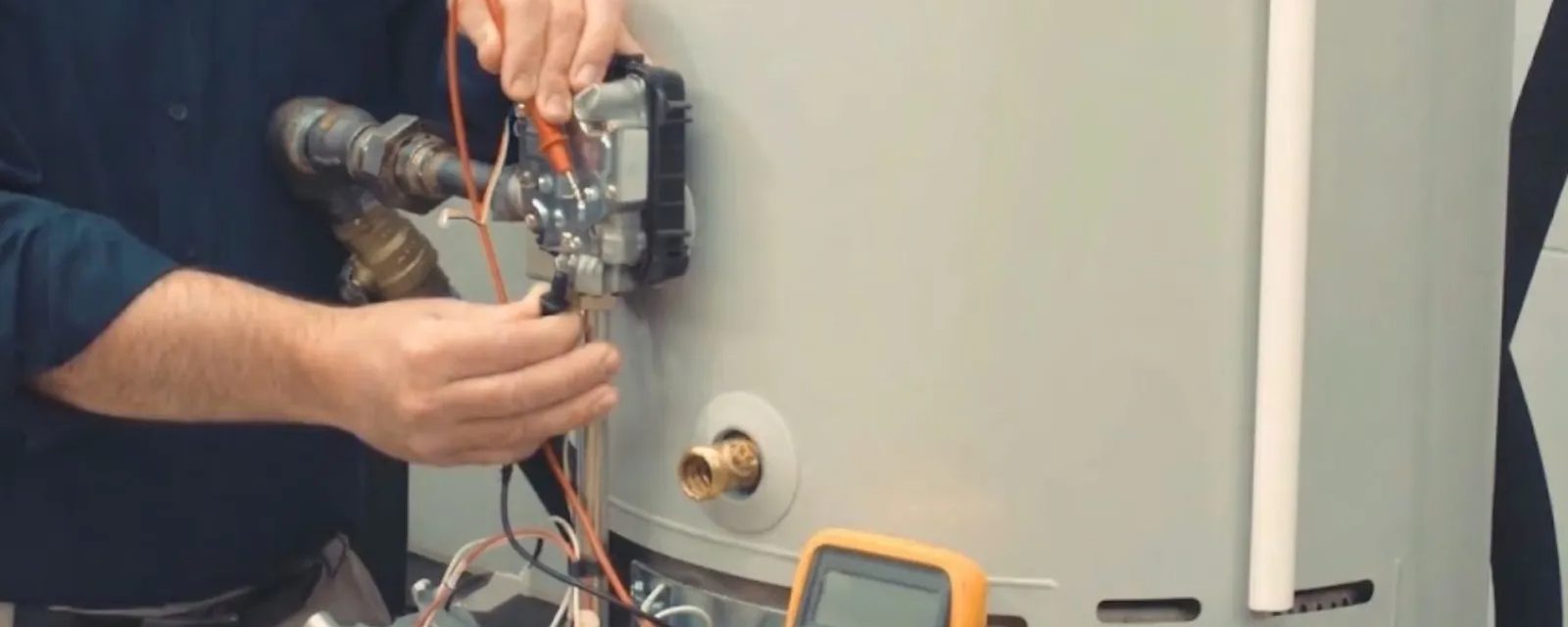
How we repair a water heater call
A short diagnosis comes first, because the same cold shower can come from five different failures.
- 1
Make it safe
We shut off gas or power and water, then check for leaks and fuel odors.
- 2
Test the parts
Elements, thermostats, thermocouples and valves are tested one at a time.
- 3
Give the options
You hear the repair path and the replace path, with a clear price before work starts.
- 4
Repair and refill
We swap the part, refill, purge air and relight or restore power.
- 5
Test on the way out
We check temperature, venting and the relief valve discharge pipe before leaving.
Gas, electric and hybrid heater repair
The repairs differ by fuel and by design, so tell us what is in your utility closet when you call.
Gas heaters
Common repairs include thermocouples, pilot assemblies, gas control valves and flue draft problems. Burner and venting work stays with a licensed plumber because a bad flue can push exhaust into the house.
Electric heaters
Most no-hot-water calls come down to a heating element or thermostat. The tank has two of each, and a dead lower element often leaves you with a short supply of hot water.
Hybrid (heat pump) heaters
These combine a heat pump on top with backup elements. We handle the electrical side, condensate drain, air filter, relief valve and plumbing connections. Tell us the model when you call, since sealed refrigerant work can be a specialist job.
Older tank units
A heater past roughly 10 to 12 years often costs more to nurse along than to replace. We will say if a repair does not make sense.
Relief valve and pressure safety
The temperature and pressure relief valve is the part that keeps a stuck thermostat from turning the tank into a pressure vessel. It opens when temperature or pressure goes too high, and a pipe on its side should run toward the floor so scalding water goes somewhere safe.
Never cap that pipe, plug it, or screw a fitting into the valve to stop a drip. A valve that drips steadily is telling you something, such as thermal expansion in a closed system or a worn seat, and we will find out which one before replacing anything.
How Midvale water wears on a tank
East-side Midvale gets water purchased from Jordan Valley Water Conservancy District, whose 2025 report lists average total hardness of 182.4 mg/L, about 10.7 grains per gallon. That is on the very hard side by USGS classes, and it means scale builds on the bottom of a tank and coats electric elements, so a flush now and then is worth asking about.
West-side homes are fed by city wells, and the city does not publish a hardness figure. Ask Midvale Public Utilities for the annual drinking water report if you want to know what your tank is working against.
Repair it or replace it?
The answer depends on the age of the tank and where the failure is.
Repair makes sense when
- The heater is under about 10 years old
- A part like an element, thermostat or valve failed
- The tank is dry and the shell is sound
- You want to buy time for a planned upgrade
Replace when
- The tank shell is leaking
- Rust-colored water keeps returning
- The heater is past 12 years and failing again
- Repair parts would cost close to a new unit
If you are leaning toward a new unit, our page on water heater replacement covers the permit and inspection that Midvale requires.
What affects the cost of water heater repair
We do not quote a number over the phone without knowing the heater. These factors move the price.
Homeowner's insurance often covers sudden water damage from a failed tank, but not the heater itself. Photograph the leak and the floor before you clean up.
Related plumbing help
A heater that leaks into a wall or slab may not be the only wet spot, so a leak detection visit can confirm where the water is coming from. If the heater is in a basement and the floor is already wet, our burst pipe repair page covers shutoff and cleanup steps. We also serve neighbors across the line, and the Sandy plumbing page lists the areas we cover there.
Where this guidance comes from
Relief valve and discharge rules come from the International Plumbing Code (IPC) and the heater maker's installation manual. Follow the manual's guidelines for your exact model.
Water heater repair questions from Midvale homeowners
Yes. The line is answered 24/7, including holidays. We book same-day appointments when available, and you hear a clear price before work starts.
Water coming from the base is either a dripping drain valve or a failed tank. Turn off the water supply and power or gas, put a bucket under it and call us. If the tank shell has failed, repair will not hold.
On an electric heater, check the breaker and the reset button on the upper thermostat first. On a gas heater, check whether the pilot is lit. If either check does not bring heat back, one of the parts needs testing.
Not for long. The valve is a safety device, and a steady leak means pressure or temperature is too high or the valve is worn. Turn the heater off until a plumber checks it.
We handle the electrical, plumbing, condensate and relief valve work. Tell us the make and model when you call so we can say up front whether the problem is in our scope.
Signs include rusty hot water, rumbling noises, moisture at the base, and a unit older than 10 to 12 years. Any one is worth a look before the tank fails on its own schedule.
Yes. Give us the tenant's access details when you call and we will schedule around them.