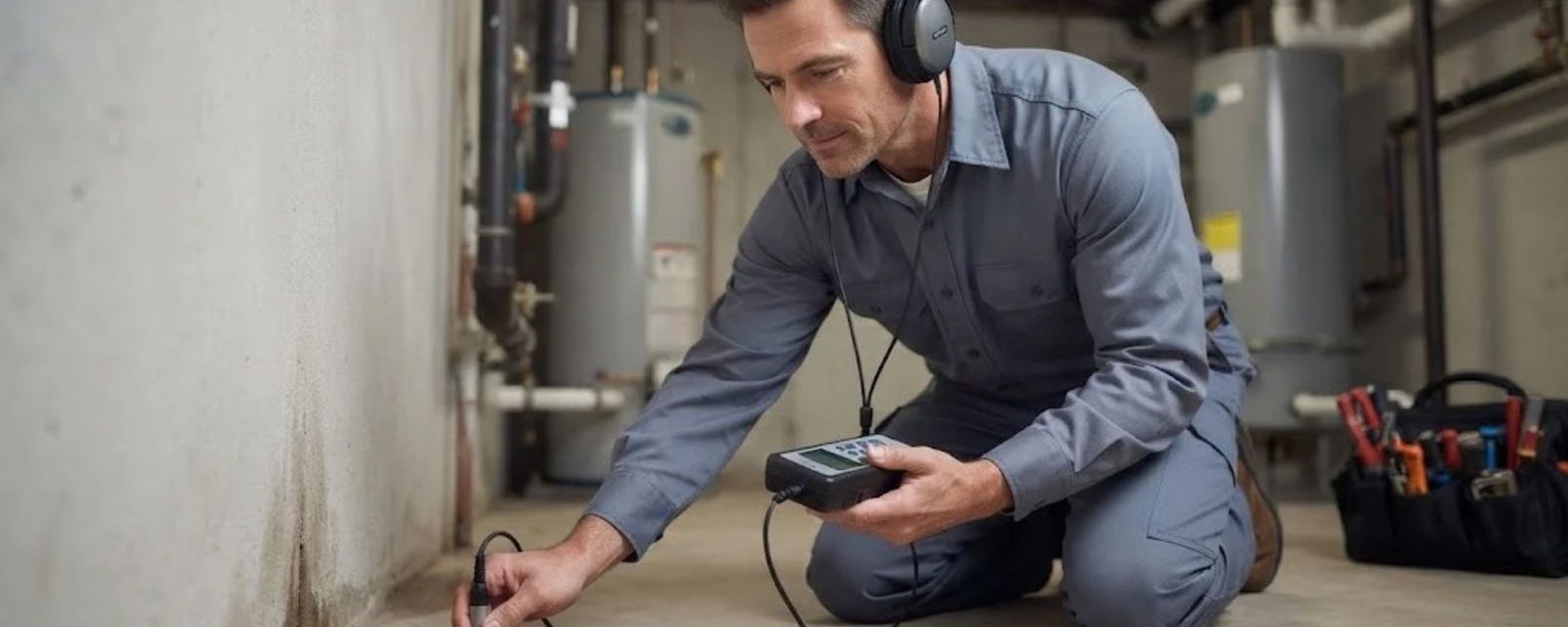
How a hidden leak shows itself
Water does not always announce itself with a puddle. A leak inside a wall, under a slab or in a buried line shows up through side effects, and the useful part is reading them correctly.
A hissing sound at night, a damp smell in a closet, a floor that feels warm underfoot, paint that bubbles, and water pressure that drops without explanation all point to a leak. So does a meter that moves while the house is empty.
When a hidden leak becomes an emergency
Call the same day if you notice any of these, because the damage grows by the hour:
- Water dripping from a ceiling, especially near a light fixture
- A wet or sagging drywall wall, or a baseboard that feels soft
- A warm spot on a slab floor, which can mean a hot water line leak
- A sudden drop in pressure combined with a meter that will not stop
- Sound of running water under the house while all fixtures are off
Water meter still running? How to check for a leak
This test takes ten minutes, costs nothing and tells you whether a leak exists before you pay anyone.
- 1
Shut everything off
Turn off every faucet, appliance and the ice maker. Make sure nobody flushes.
- 2
Read the meter
Open the meter box. If the leak indicator or the dial moves, water is moving.
- 3
Check the main
Close the house shutoff and look again. If it stops, the leak is inside. If it keeps going, it is outside.
A toilet that runs silently is the most common false alarm, so add a few drops of food coloring to each tank and look in the bowl after 15 minutes.
Water bill spiked or ceiling dripping?
Call the 24/7 line. We will start narrowing down where the water is going.
High water bill and the Midvale meter system
Midvale meters every connection and reads them monthly. The city has replaced its meters with radio-read units over the past ten years, and the monthly scans flag continuous flow and unusually high use. A notice from the city or a bill that jumped for no clear reason is a reason to check, not to wait.
If your leak is between the street and the meter, or in the meter box itself, the city is the one to call, and Midvale Public Works takes water emergencies at 801-567-7235 around the clock. If the leak is on your side of the meter, we can find it.
Leaks in ceilings, walls, crawlspaces and yards
Each location hides a different kind of leak, and each needs a slightly different approach.
Ceiling and wall leaks
A stain below a bathroom or an upstairs supply line is the common sign. We trace the drip back to its source, since the water often travels along a joist before it shows.
Under-house and crawlspace leaks
A damp crawlspace smell, mold or pooling near piers are warning signs. We check supply lines, drains and fittings before suggesting repairs.
Slab leaks
Warm floors, the sound of water under concrete, a spike in the bill or damp carpet at the wall can all mean a slab leak. A line is usually found with sound and pressure tests before anything is cut.
Buried supply lines
A wet patch in the yard, a low-pressure complaint or a meter that keeps moving points to the line between meter and house. Galvanized steel is a common failure in older homes.
If the problem is a cracked or burst pipe, see our page on burst pipe repair for shutoff steps and what the repair involves.
Old pipe and old service lines in Midvale
Midvale's own water plan describes many distribution pipes as old, undersized and possibly leaking. The city replaces galvanized service laterals with copper or poly when they leak, and aims for about 1,000 feet of pipeline per year as budget allows.
That matters for homeowners in the older parts of town, such as Old Town, because a house with a decades-old galvanized line is more likely to leak at the connection. The portion from the meter to your house is generally your responsibility, so pressure loss or a wet yard is worth checking early.
Common leak methods and what each finds
A good leak search uses more than one tool, because no single method works in every pipe and every floor.
| Method | What it finds | Best for |
|---|---|---|
| Acoustic listening | Sound of water escaping a pressurized line | Slab and buried supply lines |
| Pressure test | Whether a line holds pressure when isolated | Confirming which section leaks |
| Thermal imaging | Temperature differences from hot water leaks | Radiant heat and hot lines under floors |
| Moisture meter | Damp drywall, wood and subfloor | Ceiling and wall stains |
| Camera inspection | Cracks or breaks inside drain pipe | Drain line leaks |
Irrigation, pool and yard leaks
Sprinkler lines leak at valves, risers and joints, and the usual clue is a soggy lawn patch or a pressure drop when the system starts. We locate leaks on the water supply side up to the irrigation shutoff, and an irrigation specialist handles heads and controllers.
Pool and spa plumbing is its own area. If your pool is losing water, we can test the supply and return lines, but liner and shell problems belong to a pool contractor. A meter box leak, finally, is often a failed fitting you can see standing in water, and that one may belong to the city.
Checking it yourself or calling a plumber
A few checks are free and worth doing. After that, guessing gets expensive.
You can check
- Meter movement with everything off
- Toilet tank dye test
- Wet spots under sinks and around the water heater
- Whether hot or cold side only is losing pressure
Call a licensed plumber for
- A meter that moves with the main shutoff closed
- Wet drywall or ceiling stains
- Warm floors or sound under the slab
- Any leak you cannot trace in 30 minutes
Skipping the search and cutting walls at random is the costliest way to find a leak.
What affects the cost of leak detection
Locating a leak is a diagnostic service, and the price depends on how hard the leak is to reach.
Insurance often covers water damage from a sudden leak but may exclude the cost of finding it or repairing a long-term seepage. Ask your agent before work begins, and keep the invoice.
Related plumbing services
A leak found at a cracked pipe usually leads to a water line repair or a quick patch. If the leak is on a sewer or drain line, the camera findings may point toward sewer line repair instead. And if you manage rental or commercial property, our commercial plumbing page covers after-hours work for businesses.
Where this guidance comes from
According to the city's water plan, Midvale's meters are radio-read and scanned monthly for continuous flow, which is why a high bill is a useful clue. Repairs then follow the International Plumbing Code (IPC).
Leak detection questions from Midvale homeowners
Yes. The line is answered 24/7, including holidays, and we book same-day appointments when available. If water is actively flooding, shut off the main first and then call.
Close the house main and look at the meter again. If it stops, the leak is inside the house. If it keeps moving, the leak is between the meter and the main, which is usually on your side of the line.
Possibly. Toilets that run, irrigation lines, and buried supply leaks can all hide. Compare your monthly bills, run the meter test, and call us if the meter moves while the house is off.
Warm spots on the floor, the sound of running water when nothing is on, and a bill that rose with no change in use are the usual signs. A plumber confirms with sound and pressure tests.
Not before we have narrowed it down. We use sound, pressure and moisture readings to pinpoint a spot, so any opening is as small as possible.
Midvale Public Works handles the city side. Their 24/7 line is 801-567-7235. We handle the house side.
Yes. Give us the tenant's access details when you call and tell us which unit shows the problem. We can work from the work order.