A plumb line in plain terms
A plumb line is a cord with a pointed weight, called a plumb bob, tied to one end. You hold the other end still, let the weight settle and the string points straight at the center of the earth. That gives you an exact vertical line that no floor or wall can fool.
The word plumb comes from the Latin word for lead, which is what the weights were once made of. Plumber comes from the same root, because lead pipe was the trade's early material. The connection is more than trivia, since plumbers still check vertical runs of pipe against a plumb reference.
Today the weight is usually steel or brass. A bob weighing 8 to 16 ounces settles quickly and resists drafts.
Plumb, level and square are three different checks
People mix these up. Each one measures a different direction.
| Term | Direction | Common tool | Example |
|---|---|---|---|
| Plumb | Straight up and down | Plumb bob or 4-foot level | A wall stud or a vertical drain stack |
| Level | Perfectly horizontal | Spirit level or laser | The top of a vanity or a tub rim |
| Square | A true 90-degree corner | Framing square | The corner where two walls meet |
| Slope | A planned tilt | Level with a pitch gauge | A horizontal drain falling toward the sewer |
A spirit level has vials for both. The vial at the end reads plumb, the long vial in the middle reads level.
How to use a plumb line
It takes about two minutes once you have the string and the bob.
- 1
Fix the string at the top
Pin it at the top of the wall or post, or hold it against the surface. Let the weight hang free.
- 2
Let it settle
Wait for the bob to stop swinging. Steady it in a bucket of water if there is a draft.
- 3
Measure the gap
Measure from the string to the surface at the top and the bottom. Equal gaps mean the wall is plumb.
- 4
Mark and compare
A difference of 1/4 inch or more over 8 feet means the wall leans and fixtures against it may not sit right.
Moving a sink or adding a bath?
Call our 24/7 line. Licensed and insured plumbers, clear price before work starts.
Where plumb matters in plumbing
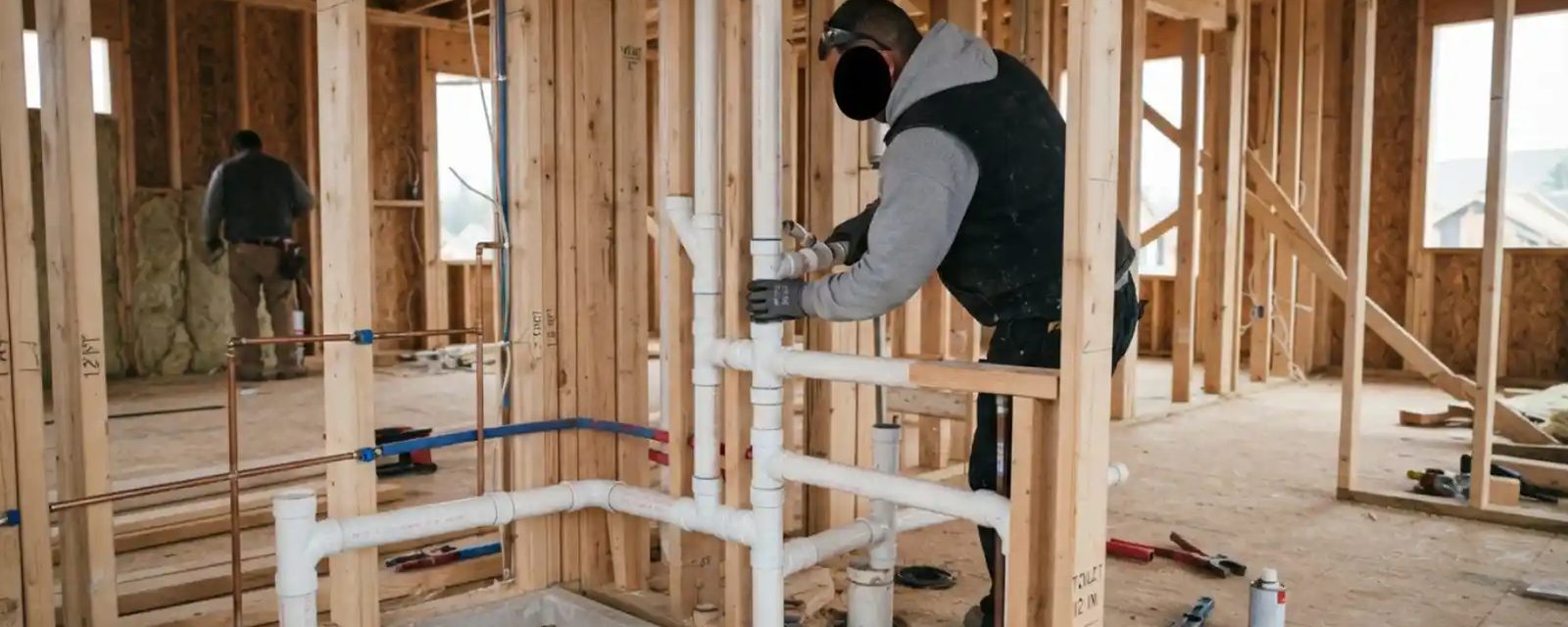
Drain stacks are the big one. A vertical stack carries wastewater straight down from upper floors to the building drain, and a stack that is out of plumb can create low spots where debris collects. The same goes for vent pipes that run up through the roof.
Fixtures also need to be true. A toilet that leans on a flange out of plumb can rock and loosen the wax seal. A shower valve set crooked puts the handle and trim off center, and a tub or vanity that is out of level lets water pool.
Horizontal drains are different. They are meant to slope, commonly about 1/4 inch per foot for smaller pipe, so water and waste keep moving. The exact slope rules for your project are a question for Midvale Building and Safety.
Plumb and level checks around the house
A few quick checks catch problems before they become leaks.
Toilet flange
The flange should sit level and flush with the finished floor. A tilted flange breaks the wax seal and leaks at the base.
Vanity and sink
Check the countertop with a 2-foot level in both directions. A slight tilt toward the drain is fine, but a tilt toward the wall is not.
Shower valve
Set the valve body plumb in the wall before the cement board goes up. After tile is on, it cannot be fixed without opening the wall.
Vertical supply risers
Pipe straps hold vertical lines in place. A line that bows can rattle and wear against framing.
Remodels and plumbing work in Midvale need a permit
Midvale Building and Safety states that new construction, additions, basement finishes, remodeling and water heater replacement require a building permit and building inspections. Permits are submitted online, and inspection requests go in online at least 24 hours ahead, Monday to Thursday.
Only the contractor on record can schedule an inspection. That means a plumber you hire for a bathroom remodel pulls the permit and books the inspector, and ask Building and Safety which inspection stages apply. Whatever the stages, a drain stack or shower valve that is out of plumb is much easier to fix before drywall goes up than after.
Building and Safety is on the second floor of City Hall at 7505 S Holden Street, phone 801-567-7200 extension 1016, closed Friday through Sunday. For any question about which of your changes needs a permit, ask them directly. They know what the city requires.
Plumb bob or a laser level
Both work. The right one depends on the job.
Plumb bob
- Costs very little
- Needs no batteries
- Works outside in light wind with a steady hand
- Slow over long heights
Laser or long level
- Fast across a whole room
- Projects a line on several surfaces
- Needs power and clear sight lines
- Harder to read in bright sunlight
When to call a pro
A plumb line is a good way to check your own work or a finished wall. It is not a substitute for a licensed plumber on a stack, a vent or a gas line. If a drain slows after a remodel, a sewer inspection camera can show whether a section is sagging, sloped the wrong way or pitched too flat.
For new fixtures or moved plumbing, our plumbing installation page covers what we do. We work across Midvale and nearby towns, see our service areas and our Sandy page for the full list.
Where this guidance comes from
Plumb and level checks match the International Plumbing Code (IPC) approach to drain slope and fixture setting, and inspection rules come from Midvale Building and Safety.
Plumb line questions from Midvale homeowners
It shows true vertical. Builders use one to check that walls, posts and corners stand straight, and plumbers use the same idea for vertical drain stacks, vent pipes and fixture alignment.
Plumb means straight up and down. Level means perfectly horizontal. They are 90 degrees apart, and most spirit levels check both with different vials.
Yes, for short runs. A 4-foot level with a plumb vial works for most walls. A plumb bob is better for tall surfaces such as a stairwell or an outdoor post.
The word comes from the Latin word for lead. Plumb bobs were made of lead, and lead pipe gave the plumbing trade its name.
Midvale lists remodeling and basement finishes among the work that needs a building permit and inspections. Ask Midvale Building and Safety at 801-567-7200 extension 1016 about your specific plan.
It can. A wall that leans can put a shower valve or vanity out of true and strain pipes. A plumber can often work around small errors, but large ones should be fixed in the framing.