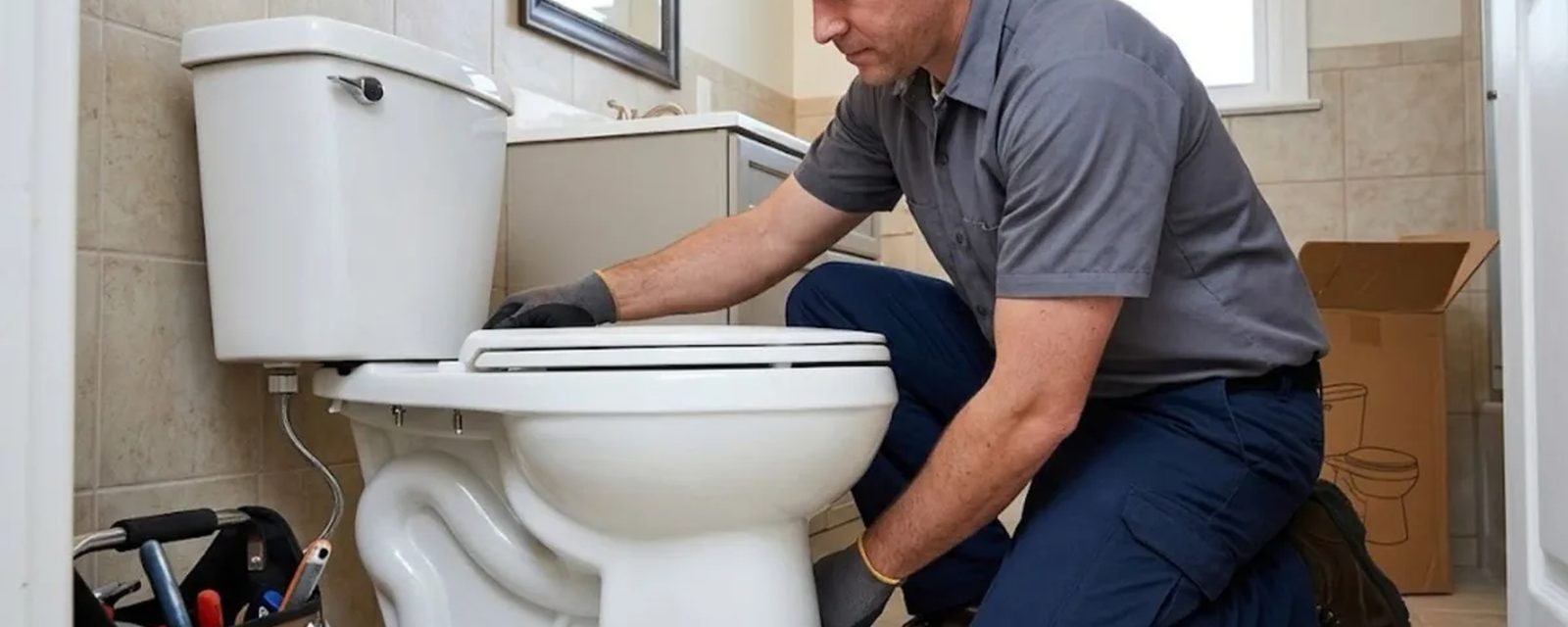
Stop an overflowing toilet in four steps
You do not need tools for any of this, and it takes about a minute.
- 1
Lift the tank lid
Push the rubber flapper down into its seat. This stops the flush that is feeding the bowl.
- 2
Close the wall valve
Turn the oval handle behind the toilet clockwise until it stops.
- 3
Do not flush again
Every flush adds about 1.6 gallons to a bowl that may already be full.
- 4
Shut the main if water keeps coming
If the valve fails or the supply line is spraying, close the main shutoff for the house.
When a toilet problem is an emergency
Call right away, any hour, if you see one of these:
- Water over the rim and across the floor, or coming through a ceiling below
- Sewage backing up in the toilet along with slow tubs or showers, which points to the main line
- A supply line or wall valve spraying or dripping steadily
- Water seeping from the base of the toilet on to a finished floor
- A cracked bowl or tank that leaks
Toilet overflowing late at night?
Our line is answered 24/7. Call and we will line up a same-day visit.
Toilet problems and what usually causes them
Most toilet trouble falls into a handful of patterns. This table matches the symptom to the part.
| Symptom | Common cause | DIY or pro |
|---|---|---|
| Runs on or hisses after flushing | Worn flapper or fill valve | Often DIY with a part from a hardware store |
| Handle is loose or does not flush | Broken lever or chain | Often DIY |
| Water on the floor at the base | Failed wax ring or loose bolts | Pro if the floor is damaged |
| Bowl fills, empties slowly | Partial clog in the trap | Plunger first, then pro |
| Rocks or wobbles | Loose closet bolts or uneven floor | Pro if the flange is cracked |
| Gurgles, backs up with other drains | Main or branch line blockage | Pro |
A toilet that runs, hisses or keeps filling
The tank holds a few gallons, and two parts control it. The flapper seals the bottom, and the fill valve refills the tank to a set level. When the flapper lets water seep past, the fill valve keeps topping up, and you hear it running at odd hours.
To test for a quiet leak, drop a few drops of food coloring in the tank and wait 15 minutes without flushing. Color in the bowl means the flapper is leaking. The EPA says an old or worn flapper can silently leak thousands of gallons a year, so it pays to fix.
Toilet clogged or backing up
A flat-bottomed plunger with a tight seal clears most single-toilet clogs in a few pushes. Plunge steadily rather than hard, and give it a minute to drain.
If water rises on the second flush, or the shower gurgles when you flush, stop. That pattern points to the line behind the toilet, not the bowl. Drain cleaning or sewer line cleaning is the right fix, because plunging a blocked main only pushes more water onto the floor.
Base leaks, rocking and loose bowls
A toilet is sealed to the drain with a wax ring or foam gasket under the bowl. Three problems come from that seal.
Wet floor around the base
Water at the base after a flush usually means the wax ring has failed. The toilet has to be lifted, the ring replaced and the bowl reset.
A toilet that rocks
Rocking bends the ring and breaks the seal. Closet bolts may be loose, or the floor may not be level.
A cracked flange
The flange is the ring on the floor that holds the bolts. If it is cracked or sits below the finished floor, it needs repair before the toilet goes back.
Sweating tank
Cold water makes the tank sweat in humid rooms. Drips on the floor look like a leak but are condensation.
DIY the fix or call a plumber
A fill valve or flapper swap is a reasonable weekend job. Other repairs are not.
Reasonable to try yourself
- Replacing a flapper or chain
- Swapping a fill valve
- Tightening tank bolts or a supply line
- Plunging a single clogged bowl
Better to call a plumber
- Water on the floor at the base
- A cracked bowl, tank or flange
- Backups that involve other drains
- Any shutoff valve that will not close
Hard water and toilet parts
Jordan Valley Water Conservancy District reports a 2025 average total hardness of 182.4 mg/L, which USGS calls very hard. That water supplies the east side of Midvale. Minerals collect on fill valve seats and under flappers, so parts on the east side can stick or leak earlier than you expect.
West-side water comes from city wells, and the city does not post a hardness figure on its pages. Ask Midvale Public Utilities for the annual water quality report if you want the number for your block.
Toilet installation and replacement
A new toilet makes sense when the bowl is cracked, the toilet clogs often or the flush runs through more water than you want. Toilets sold since 1994 are limited to 1.6 gallons per flush by federal rule, and many models use less. Water-saving fixtures are also required in new construction under the plumbing code adopted by the city.
The key measurement is the rough-in, the distance from the wall to the center of the drain. Twelve inches is standard, and 10 and 14 inch rough-ins exist. We measure before you buy, and we remove the old toilet, set the new one on a fresh seal, connect the supply and test it.
Bringing your own toilet is fine, and so is asking us to help you pick the size. Elongated bowls run about two inches longer than round ones, which matters in a small bathroom.
What affects the cost of toilet repair
A flapper swap and a full reset on a damaged floor are very different visits.
Insurance may cover sudden overflow damage but usually not the wear on parts. Photograph any wet floor or ceiling before you clean up.
Related plumbing help
If water is dripping from the supply line or shutoff valve rather than the toilet itself, faucet repair covers the fixtures and valves around the bathroom. When a wet bathroom floor does not match any toilet problem, the leak may be behind the wall, and leak detection can trace it.
Toilet repair questions from Midvale homeowners
Yes. The line is answered 24/7, including holidays. We book same-day appointments when available and give you a clear price before work starts.
A leaking flapper lets tank water seep into the bowl, so the fill valve restarts. Try the food coloring test. If color appears in the bowl without flushing, replace the flapper.
If it is a steady leak, yes, because it soaks the subfloor. Shut the wall valve and call. A small puddle after a flush usually means a failed wax ring.
Yes, as long as it is the right size for your rough-in. Tell us the model or send the specs on the call and we will confirm it fits.
A repeat clog often means the problem is beyond the bowl, such as a partial blockage in the line or a toy or wipes stuck in the trap. We can check both.
Yes. Removal and disposal can be part of the installation, and we will say so in the price before work starts.