How to tell if you have a slab leak
One sign can mean many things. Two or three together make a slab leak much more likely.
Warm spot on the floor
A hot water line leaking under the slab warms the concrete. You may feel it on bare feet or see it in a carpet that stays warm.
Running water sound
Hissing or trickling when every fixture is off often comes from a pressurized line leaking under the floor.
High water bill
A bill that climbs with no change in habits is a classic clue. A leak runs 24 hours a day.
Damp floor or musty smell
Moisture under the flooring shows up as warped boards, damp carpet edges, mold or a smell like wet cardboard.
Low pressure
Water escaping under the slab can lower pressure at faucets, especially hot taps.
Cracks or shifting
Leaking water can erode soil under the slab. New cracks in walls or tile are a warning to check.
A simple meter test you can do in 15 minutes
Do this before calling anyone. It tells you whether water is moving when it should not be.
- 1
Shut everything off
Turn off all fixtures, the ice maker and the irrigation, and check that no toilet is running.
- 2
Read the meter
Open the meter box and note the dial or the small leak triangle. If it spins, water is moving.
- 3
Check again
Wait 15 minutes without using water. If the reading moved, you have a leak somewhere.
A moving meter does not prove the slab is the culprit. A toilet flapper, a sprinkler valve or a yard line can do the same thing. That is why a technician uses sound and heat tools to narrow it down.
What Midvale's old pipes and meter scans mean for you
Midvale's own water conservation plan describes many distribution pipes in the city as old, undersized and possibly leaking. The city replaces galvanized service laterals with copper or poly when they leak or when a pipeline project reaches them. It aims to replace about 1,000 feet of pipeline each year as budget allows.
For you, that matters in two ways. The pipe from the meter to your house is generally the property owner's responsibility, and older homes may still have galvanized or aging lines there. Galvanized steel corrodes from the inside and eventually pinholes, which is how many leaks start.
Midvale also reads every meter monthly with radio-read devices, and monthly scans flag continuous flow and high usage. If you get a notice or see a jump on your bill, run the meter test above. Leak and pressure questions go to Midvale Public Utilities at 801-567-7239, open Monday to Thursday. A water emergency after hours goes to Public Works at 801-567-7235.
Water bill jumped for no reason?
Our line is answered 24/7. Licensed and insured plumbers, clear price before work starts.
How a slab leak is found
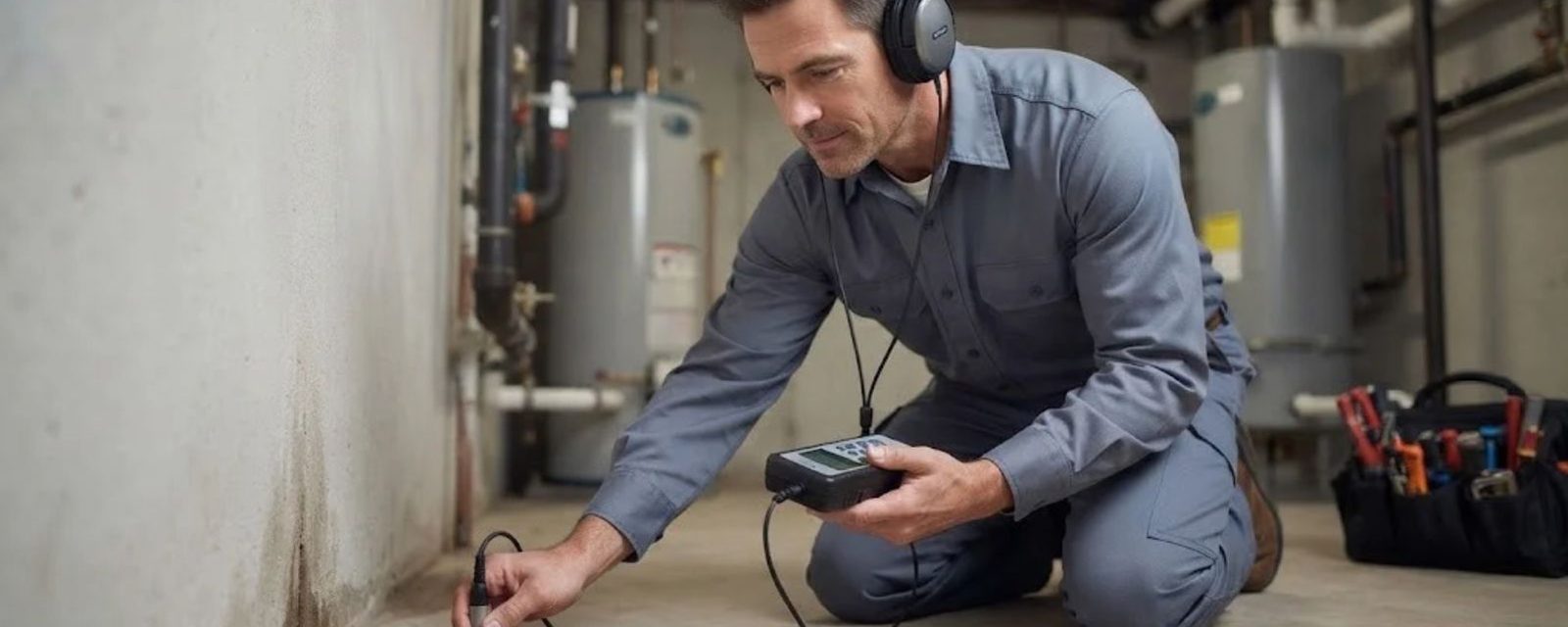
Jackhammering blind is a bad plan. A technician starts with an acoustic listening device that picks up the sound of escaping water through concrete. Thermal imaging can show the warm path of a hot water line. Pressure tests isolate which part of the system is losing water.
Once the line is located, the plumber marks the floor and explains the choices before any work begins. That keeps the damage to the smallest area that does the job.
Slab leak repair options compared
The right fix depends on how many leaks there are, how old the pipe is and where it runs.
| Option | What it involves | Best for |
|---|---|---|
| Spot repair | Break the slab, cut out the bad section, splice in new pipe | One leak in otherwise sound pipe |
| Reroute | Abandon the slab line and run new pipe through walls or the attic | Repeated leaks or hard-to-reach lines |
| Repipe | Replace the whole system with new pipe | Old pipe leaking in several places |
| Pipe lining | Coat the inside of the line with a new liner | Some lines where access is limited |
If several leaks show up, a full repiping job may cost less over time than repeated spot repairs. We explain what the camera and tests show before you decide.
DIY checks or a licensed plumber
You can gather information. You should not open a slab.
What you can do yourself
- Read the meter and do the 15-minute test
- Listen near walls and floors for hissing
- Feel the floor for warm spots
- Take photos and note when symptoms started
What needs a licensed plumber
- Pinpointing a leak under concrete
- Breaking or cutting into the slab
- Rerouting or replacing supply lines
- Pulling any permits the repair needs
When a slab leak needs a call right now
Most slab leaks are slow. A few are not, and they get worse by the hour.
- Water is bubbling up through the floor or a crack
- A hot water line is leaking and the floor feels hot
- Your meter is spinning fast with everything off
- Flooring is swelling or flooding near electrical outlets
What to do while you wait
Turn off the main water valve, usually where the line enters the house or at the meter box. That stops the leak and keeps the slab from taking on more water. Open a faucet to relieve pressure.
Keep people and pets off wet floors, and stay away from outlets and cords near the water. Take photos of damage for your insurance company. Policies differ on slab leaks, so read yours or ask your agent about coverage for the repair and the water damage.
Where we serve
We help homeowners across Midvale and nearby towns. If you live just south of Midvale, see our Sandy page, or browse the full list of service areas.
Where this guidance comes from
City meter facts come from Midvale's water conservation plan, and repairs follow the International Plumbing Code (IPC).
Slab leak questions from Midvale homeowners
Warm floor spots, the sound of water with all fixtures off and a meter that moves are the best clues. A technician confirms it with listening tools and pressure tests before anything is cut.
Yes. Shut off all water use, read the meter, wait 15 minutes and read it again. If the numbers or the leak indicator moved, water is leaking somewhere on your side of the meter.
Sometimes. A slow leak can wait for a scheduled visit, but water coming up through the floor, a hot floor or a fast-spinning meter means shut off the main and call right away.
Midvale says lateral maintenance and ownership typically falls to the property owner, not the city. Ask Midvale Public Utilities at 801-567-7239 where the city responsibility ends on your street.
The city's water plan says galvanized service laterals are replaced with copper or poly when they leak and during pipeline projects. Private lines inside your property are still your responsibility.
It varies. Many policies cover sudden water damage but may not cover the cost to repair the pipe itself, and some exclude slab leaks. Read your policy and ask your agent before work starts.