Find out where the water is coming from
Fixing the wrong cause wastes a weekend. Spend an hour on diagnosis first.
- 1
Do the foil test
Tape a 2-foot square of foil to the wall or floor. Check it after two days. Moisture on the outside means seepage, on the inside means condensation.
- 2
Note the timing
Water after rain or snowmelt points to the outside. Water in dry weather points to a plumbing leak.
- 3
Look at the spot
Cracks, the joint where wall meets floor and window wells are the usual entry points.
If water appears with no rain and the meter moves with everything off, you may have a plumbing leak instead. Our leak detection crew can sort that out.
The cheap fixes that stop most basement water
These do the most good for the least money.
Fix the grading
Soil should slope away from the foundation, about 6 inches of drop over the first 10 feet. Fill low spots with compacted soil, not mulch.
Extend the downspouts
A roof sheds a lot of water in a storm. Run downspouts at least 5 to 10 feet from the wall with an extension or a buried drain.
Clean the gutters
A clogged gutter pours water down the wall. Clear them before fall storms and before snowmelt season.
Cover window wells
A clear well cover keeps rain out. Make sure the well has gravel or a drain at the bottom.
Midvale's stormwater page and the sandbag shed
The City of Midvale's stormwater page says residents are responsible for protecting their own property in a flood. The city does not promise to keep water out of your basement, so your own grading, gutters and window wells matter.
Salt Lake County runs a free sandbag shed, the Flood Control Sandbag Shed, at 604 West 6960 South in Midvale. It is open seven days a week from 8am to 6pm. Bring a shovel, since you fill the bags yourself.
If you see a spill or illegal discharge going into a storm drain, report it to Midvale Public Works at 801-567-7235. That line also handles water emergencies. Sandbags are useful at doors, window wells and low entry points when heavy rain or snowmelt is forecast, but they are a short-term barrier and not a repair.
Is that a leak or condensation?
Our line is answered 24/7. Licensed and insured plumbers, clear price before work starts.
Interior sealer or exterior drainage
Paint-on products are everywhere. Know what they can and cannot do.
DIY interior sealer
- Fine for damp walls and minor seepage
- Fails when water pressure pushes behind it
- Cannot fix a leak at the floor and wall joint
- Cheap and a one-day job
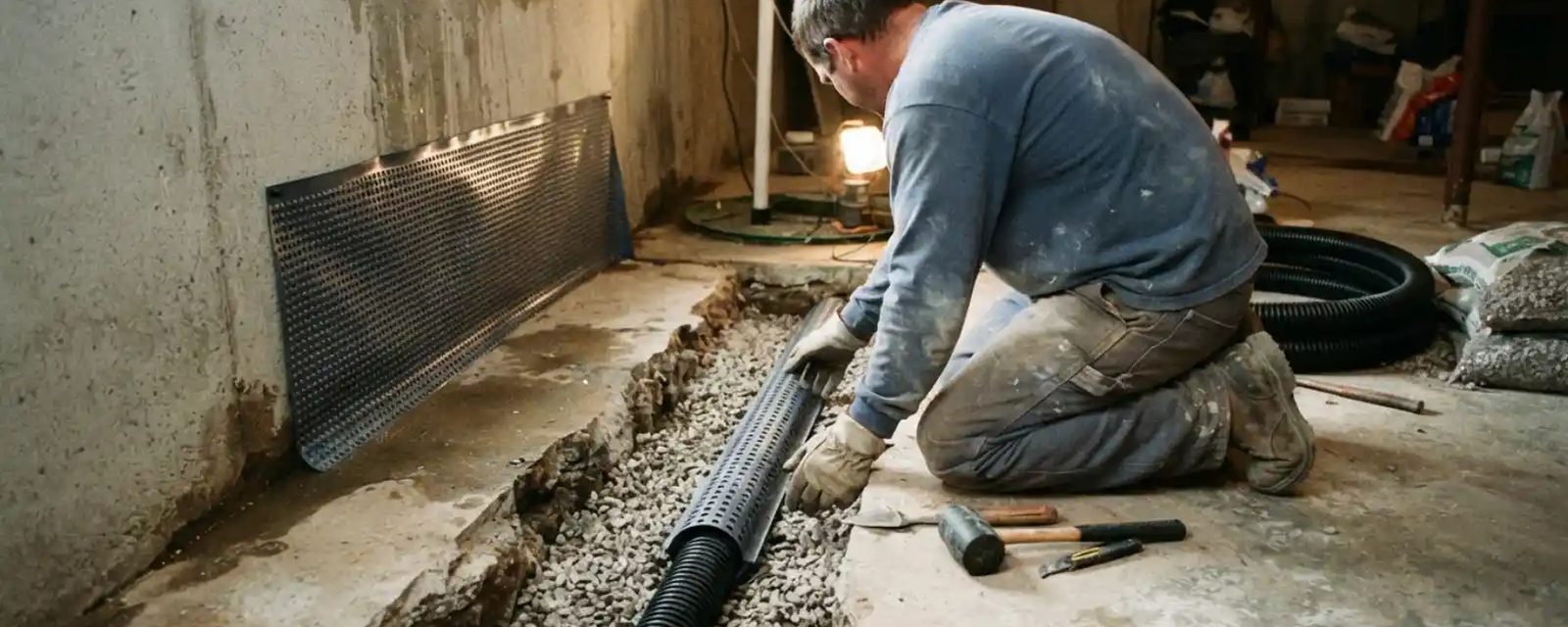
Pro drainage and sump systems
- Collects water before it enters the room
- Handles groundwater that rises
- Can include a sump pit and pump
- Needs digging or cutting the floor
A weekend DIY waterproofing checklist
Work in this order. Each step reduces what the next one has to deal with.
- Clean gutters and add downspout extensions
- Regrade low spots next to the foundation
- Seal small cracks in the wall with hydraulic cement
- Install clear covers on window wells
- Apply a masonry sealer to damp walls only
- Run a dehumidifier to keep humidity under 50 percent
Hydraulic cement sets in a few minutes, so mix small batches. Chisel a crack into a dovetail shape so the cement locks in instead of popping out.
Signs it is more than a DIY problem
These point to water pressure, structural movement or plumbing that DIY will not solve.
| What you see | What it likely means | Who handles it |
|---|---|---|
| Water at the floor and wall joint after every storm | Groundwater pushing up | Pro drainage or a sump system |
| Horizontal crack with the wall bowing in | Soil pressure on the foundation | Structural engineer first |
| Water with a sewage smell | Sewer backup | Plumber, right away |
| Wet floor with no rain | Plumbing leak or high groundwater | Plumber to test the lines |
| Sump pump runs constantly | High water table or a stuck float | Plumber to check the pump |
Sump pumps and drains
A sump pump sits in a pit and pushes water out of the basement before it rises over the floor. If your home has one, test it a few times a year by pouring a bucket of water into the pit. It should start, pump out and shut off.
A pump is only as good as its power. A storm that knocks out electricity also stops the pump, so a battery backup is worth asking about. Our sump pump repair page covers repairs and testing.
When to call a pro
Stop the DIY and call a licensed plumber if any of these apply.
- Water is coming up through the floor drain or from a toilet
- The sump pump has failed during a storm
- You smell sewage
- Water is near the electrical panel or outlets
Permits for basement work
Midvale Building and Safety lists basement finishes among the work that needs a building permit and inspections. Simple waterproofing like sealing a crack or adding a downspout extension does not involve a finish, but any plan to finish the basement or add drains should be checked with them first at 801-567-7200 extension 1016.
We help homeowners across Midvale and nearby towns. See our service areas and our Sandy page for the full list.
Where this guidance comes from
Stormwater and sandbag details come from Midvale City and Salt Lake County, and drainage work follows the International Plumbing Code (IPC).
Basement water questions from Midvale homeowners
You can handle the outside causes yourself: grading, gutters, downspouts and window wells. Sealing small cracks is also a homeowner job. Groundwater coming up through the floor needs drainage and a sump.
On damp walls and light seepage, it can. When water pushes against the wall from outside, it peels off. It is a finish, not a drainage system.
Salt Lake County's Flood Control Sandbag Shed is at 604 West 6960 South in Midvale, open seven days a week from 8am to 6pm. It is free. Bring a shovel.
The city's stormwater page says residents are responsible for protecting their property in floods. Call Midvale Public Works at 801-567-7235 for a water emergency or to report a spill into a storm drain.
Tape foil to the wall for two days. Moisture on the outer face of the foil is condensation from room air. Moisture under it means water is coming through the wall.
Basement finishes need a building permit. Small DIY jobs like sealing a crack usually do not involve one, but ask Midvale Building and Safety at 801-567-7200 extension 1016 about your plan.