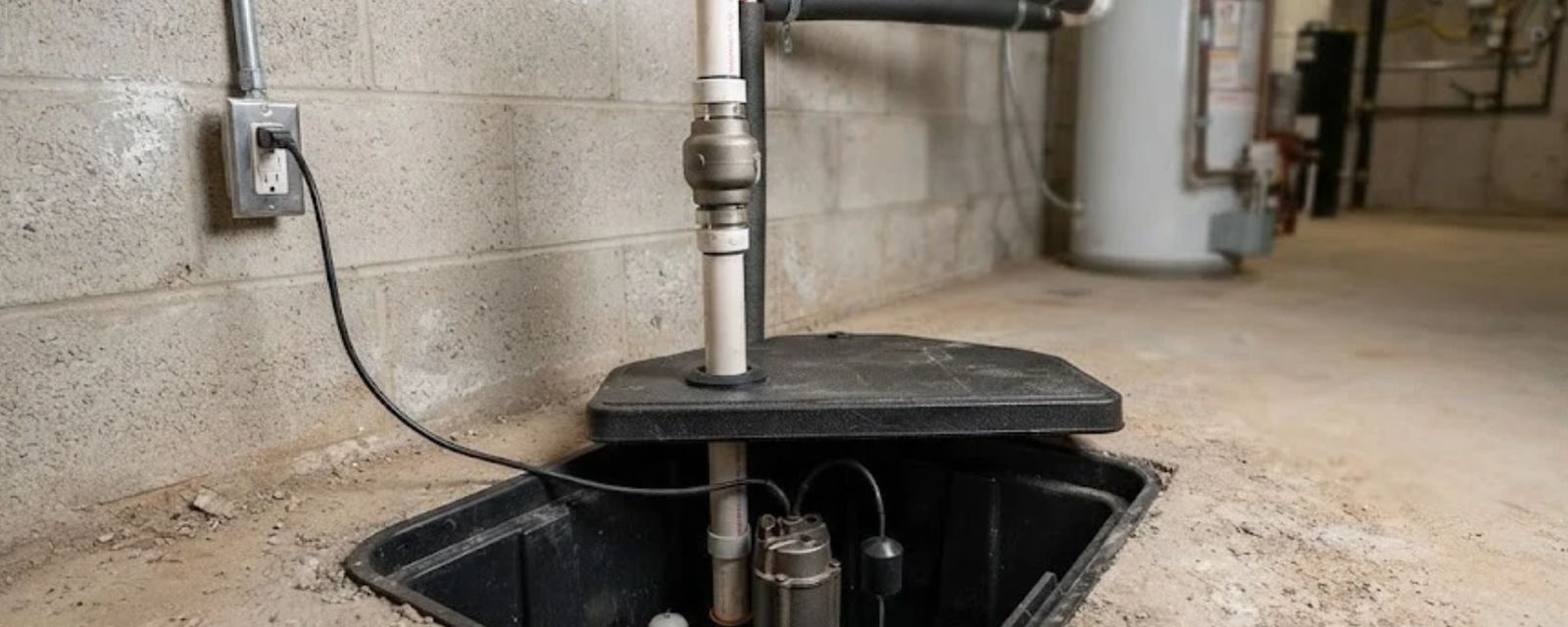
Do I need a backup sump pump?
If your basement has a sump pit, a backup is worth considering for one reason. A single pump is a single point of failure. Pumps wear out, floats stick, switches fail, and storms often take the power out in the same hour that the pit needs it most.
A backup matters more if the basement is finished, if you store things below grade, or if the pit fills in minutes during heavy rain. If the pit rarely runs, a backup is cheaper than the carpet you would otherwise replace.
Four ways a primary sump pump stops working
Knowing the failure mode helps you pick the backup that actually covers it.
Power outage
A normal pump needs household power. When the grid drops during a storm, the pump stops and the pit keeps filling.
Stuck float switch
The float can wedge against the pit wall or a pipe and never tell the motor to start. The pump is fine, but it never runs.
Clogged intake or check valve
Silt and gravel clog the intake. A stuck check valve lets water run back into the pit after every cycle.
Age and overwork
A pump that runs every few minutes for weeks wears out faster. Many last 7 to 10 years under normal duty.
Water in the pit and the pump is silent?
Our line is answered 24/7. Call and we will start planning a same-day visit when available.
Backup pump types compared
Three setups cover most homes. The right one depends on your power, your water pressure and how much flood risk you accept.
| Backup type | Runs on | Strength | Limit |
|---|---|---|---|
| Battery backup pump | 12 volt battery, charged by the house | Works through outages, simple to add beside the main pump | Battery runs hours, not days, and needs replacing every few years |
| Second electric pump | Household power | Covers a failed main pump or float | Does nothing in a power outage unless on a generator |
| Water-powered backup | City water pressure | No battery or power needed | Uses a lot of water, and rules vary, so check with your utility first |
| Generator plus second pump | Portable or standby generator | Covers long outages | Higher cost and needs safe generator placement outside |
If your pump is old and the basement has flooded before, replacing the main pump and adding a backup is often better than adding only a backup. Our sump pump repair service can check which one needs work.
How a backup sump pump installation works
The details vary with the pit. This is the usual order.
- 1
Check the pit
Most pits are about 18 inches wide and 22 to 24 inches deep. A second pump needs room beside the first or its own pit.
- 2
Set the backup lower or higher
The backup float is placed a few inches above the main pump float so it runs only if the main one fails.
- 3
Plumb the discharge
Each pump gets its own check valve and tees into the discharge pipe, often 1.5 inches wide.
- 4
Connect power
Battery units need a charger on a protected outlet. A second pump needs its own GFCI outlet.
- 5
Test under load
Pour about 5 gallons into the pit and watch both pumps run through a full cycle.
Stormwater, sandbags and your sump discharge in Midvale
The city of Midvale says residents are responsible for protecting their own property in a flood. Salt Lake County runs a free sandbag shed at 604 West 6960 South in Midvale, open seven days a week from 8 a.m. to 6 p.m. Bring a shovel. Sandbags help keep water off a window well or a door, but they do not replace a working pump.
Sump water goes out through your discharge pipe, so know where it lands. If you ever see a spill or illegal discharge going into a storm drain, the city asks you to report it to Midvale Public Works at 801-567-7235. Before you point a new discharge line at the street, ask Public Works what is allowed at your address.
Monthly sump pump test routine
This takes five minutes and finds most failures before a storm does.
- Pour 3 to 5 gallons of water into the pit and watch the float lift
- Confirm the pump turns on, empties the pit and shuts off
- Listen for grinding, rattling or a motor that hums without pumping
- Check that the discharge pipe is clear and ends away from the foundation
- Unplug the main pump and see whether the backup starts
- Inspect the battery terminals and charger light on a battery system
Write the test date on the pit lid. If the pit holds standing water that does not drain, or the pump runs without stopping, call a plumber.
DIY install or licensed plumber?
Adding a backup is a common weekend project, but the plumbing and electrical details matter.
A confident homeowner can often
- Test and clean the existing pump
- Swap a bad float switch
- Add a plug-in battery unit beside the pump
- Clear debris from the pit and intake
Better handled by a pro
- Cutting into the discharge line and adding a second check valve
- Making a new pit in a concrete slab
- Wiring a dedicated outlet
- Finding why the pit fills so fast
- Fixing a discharge that sends water back toward the house
If the pit fills faster than a pump can keep up, the water may need a longer fix than a pump. Our basement waterproofing page explains the other side of the problem.
When to call a pro
Call if the pump runs and the pit still fills, if you smell burning, if the cord or outlet is wet, or if water is already on the floor. Keep power off to any wet outlet and stay out of standing water that might reach electrical equipment. We answer 24/7, and we book same-day appointments when available.
We do not install generators, and we will tell you if a problem is outside plumbing. We serve Midvale and nearby towns, including Sandy, and you can browse more of our coverage on the areas page.
Where this guidance comes from
Discharge and check valve details follow the International Plumbing Code (IPC) and the pump maker's guidelines, and the stormwater facts come from Midvale City's stormwater page.
Backup sump pump questions from Midvale homeowners
It depends on the battery and how often the pump cycles. In steady flooding, many run for several hours. In light seepage they last longer. Ask for the amp-hour rating and expect to replace the battery every few years.
Yes, in most installs. Each pump needs its own check valve before they join, so one pump does not push water back through the other.
No. Sump water is clean rainwater and groundwater, and sending it into the sanitary sewer can overload the line. Ask Midvale Public Works where your water may go.
Often not by default. Many policies need a separate endorsement for water backup. Check your policy and keep records of pump tests.
Salt Lake County runs a free Flood Control Sandbag Shed at 604 West 6960 South in Midvale. It is open seven days a week from 8 a.m. to 6 p.m. Bring a shovel to fill your own bags.
Yes. Our line is answered 24/7, including nights, weekends and holidays. We book same-day appointments when available and give a clear price before work starts.