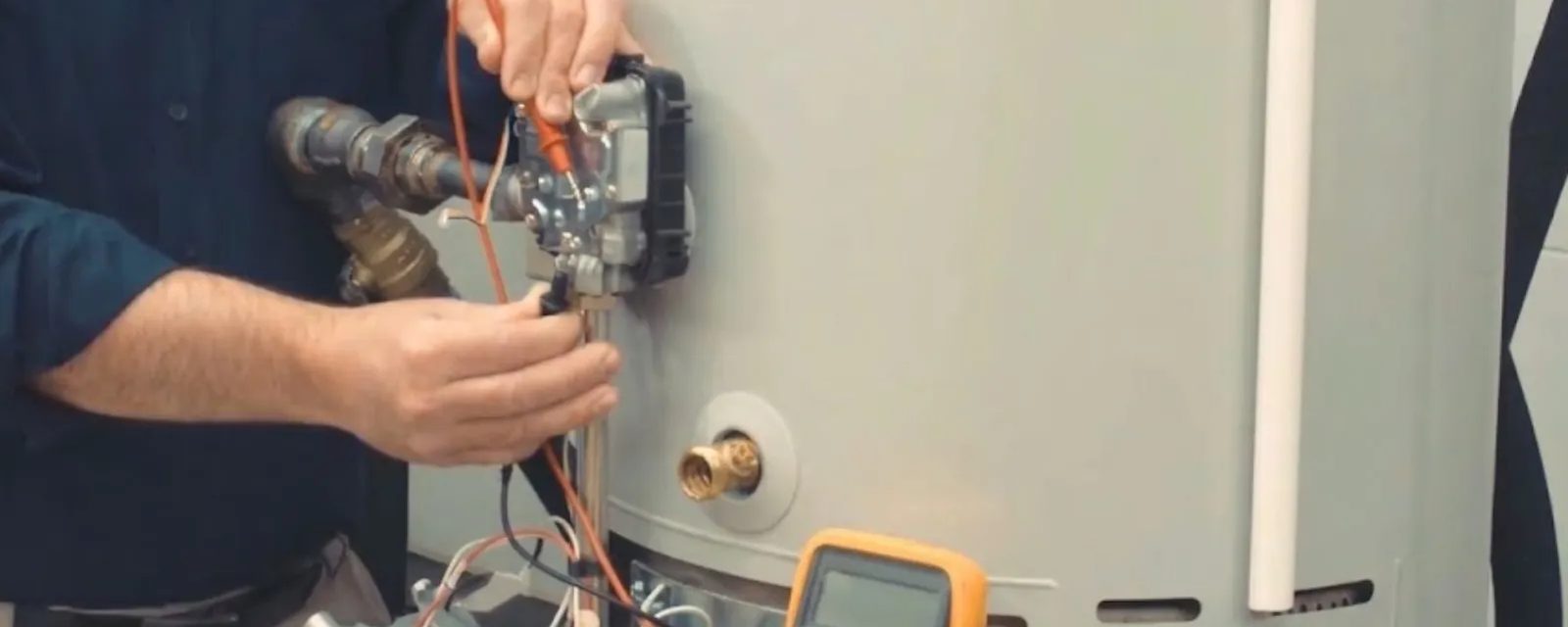
What does a water heater relief valve do?
A water heater relief valve is formally called a temperature and pressure relief valve, or T&P valve. It sits on the side or top of the tank with a short lever. If the water inside gets too hot or the pressure climbs too high, a spring opens the valve and releases water so the tank does not rupture.
Most are rated around 150 psi and 210 degrees Fahrenheit, which is above normal operating levels. Household water usually sits near 120 degrees and 40 to 80 psi. When the valve opens, something is wrong, and the valve is doing exactly the job it was built for.
When a relief valve is an emergency
A valve that blows steaming water or does not stop flowing needs attention now. Hot water at that temperature can scald in seconds.
Shut off power at the breaker for an electric heater, or turn the gas control to pilot or off for a gas heater, then call us. If you ever smell gas, leave the building right away and call Enbridge Gas at 1-800-767-1689 or 911 from a safe place.
- Water spraying or steaming from the valve or discharge pipe
- Rumbling or banging from the tank before the valve opens
- A discharge pipe that is hot to the touch all the time
- Water pooling under the tank with no obvious leak at the fittings
Steam or scalding water at the valve?
Our line is answered 24/7. Turn off the heater's power or gas supply and call us.
How to test a relief valve safely
A quick annual test shows whether the valve moves and reseats. Wear shoes and keep your hands and face clear of the discharge.
- 1
Confirm the discharge pipe
Make sure the pipe is attached and points down toward a floor or drain, never at people.
- 2
Place a bucket
Set a bucket beneath the open end because the first water out may be very hot.
- 3
Lift the lever briefly
Raise it for one or two seconds, then release. You should hear a rush of water and then a snap shut.
- 4
Watch for dripping
If water keeps trickling after the lever drops, the valve may not be seating and likely needs replacing.
If the lever is stuck or crusted shut, do not force it. A corroded valve is the one most likely to fail when needed, and a plumber can replace it.
Why a relief valve drips and what to do
A drip does not always mean a bad valve. The cause decides the fix.
| What you see | Likely cause | Typical fix |
|---|---|---|
| Steady drip, the tank is hot | Thermostat set too high or failed | Lower the setting to about 120 degrees, call if it persists |
| Drips only when the heater is heating | Thermal expansion with no relief | Check for an expansion tank |
| Constant drip all day | Worn valve seat or mineral buildup | Replace the valve |
| Spits water after a hot shower | High house water pressure | Test pressure with a gauge at a hose bib |
| Drip stops after you lift the lever | Debris on the seat | Watch for return, replace if it comes back |
A water heater repair visit can check the thermostat, the pressure and the expansion tank in one trip.
Discharge pipe: safe setup versus common mistakes
The valve is only safe if the water has a clear, safe path out. Codes vary, so confirm details locally.
Common mistakes
- Capping or plugging the pipe so it never drips
- Threading the end of the pipe
- Running the pipe up or flat
- Adding a shutoff valve on the discharge line
- Using thin plastic that cannot take hot water
Safe setup
- Pipe as large as the valve outlet, rated for hot water
- Runs downhill the whole way
- Ends a few inches above the floor or a drain
- Open end visible and unthreaded
- No valves, caps or plugs anywhere on the line
Ask Midvale Building and Safety about the exact termination height and drain rules for your home. Do not copy details from another city.
Permits when a relief valve problem leads to a new water heater
Midvale Building and Safety says water heater replacement requires a building permit and building inspections. That matters because a leaking valve on a tank that is already old often ends in a replacement, and the permit step applies when the tank itself is swapped. Inspections are requested online at least 24 hours ahead, and only the contractor on record schedules them.
A valve swap by itself is smaller than a replacement, and the city page does not list it. Ask Building and Safety at City Hall, 7505 S Holden Street, if you are unsure. If the tank does need replacing, ask any contractor how the permit and inspection will be handled, and read about our water heater replacement service.
Annual relief valve checklist for homeowners
A few minutes once a year catches most trouble.
- Look at the valve for green crust, rust or white scale
- Lift the lever and confirm water flows and stops
- Check that the discharge pipe is present, unblocked and unthreaded
- Measure house water pressure with a gauge, and keep it under about 80 psi
- Confirm the thermostat is near 120 degrees
- Note the tank's age on the label, since tanks often fail in 8 to 12 years
Can you replace the relief valve yourself?
A handy homeowner can swap the valve if the job is simple. You turn off power or gas, close the cold supply, open a hot tap and drain a few gallons below the valve, unscrew the old one, and thread in a new valve of the same rating. The risk is a mismatched valve rating, a cross-threaded fitting or a tank that is too old to disturb.
Call a plumber if the tank is more than about ten years old, if the valve is corroded in place, or if it is on a gas heater and you are not sure the control is in the right position. We also advise a professional when the discharge pipe has to be rerouted. We serve Midvale and nearby towns, including Sandy, and our areas page lists where else we go.
Where this guidance comes from
Relief valve requirements follow the International Plumbing Code (IPC) and the water heater maker's guidelines.
Relief valve questions from Midvale homeowners
Once a year is a common routine. Lift the lever for a second or two with a bucket beneath the pipe, and confirm the valve closes and does not drip.
It can be high pressure, high temperature, thermal expansion or a worn seat. A plumber measures pressure and temperature first so the right part is fixed.
No. Plugging it removes the safety device. If the valve leaks, find the cause or replace the valve, never cap it.
It can be scalding. Keep children and pets away from the open end, and never put your hand under it during a test.
Yes. Midvale's building page says water heater replacement requires a building permit and inspections. Ask Building and Safety about smaller work like a valve swap.
Yes. Our line is answered 24/7. We book same-day appointments when available, and you hear a clear price before work starts.